
The cost of getting 96127 wrong
The revenue leak on one side, the compliance risk on the other
Most practices eligible to bill CPT 96127 never bill it at all. A PHQ-9 handed to a patient at check-in, scored by a medical assistant, reviewed by the clinician – and never captured as a line item, because nobody built the workflow to capture it. That is uncaptured revenue, quiet and permanent, repeating across every well visit, every new-patient intake, and every annual exam where a validated instrument gets used and never billed.
The opposite failure carries more weight. Practices that bill 96127 systematically wrong – too many units, no supporting documentation, the same instrument billed regardless of clinical indication – are not looking at a denial. They are looking at False Claims Act exposure: repayment demands, civil penalties, and in egregious or repeated cases, program exclusion. 96127 sits in an unusual position for a low-dollar code – underuse costs a practice money every month, and overuse can cost a practice its ability to bill federal payers at all. Both directions start from the same root cause: nobody in the practice can say, with confidence, exactly where the line sits.
Why this code is uniquely denial-prone
Most CPT codes carry one real failure point. 96127 carries three, stacked on top of each other: a per-day unit limit, a two-part modifier sequence that has to be applied in the correct order, and an NCCI bundling edit that can silently void the claim if it is billed alongside the wrong code on the same date. Miss any one of the three and the claim denies – and because behavioral health billing already runs hotter than general medicine on denials, a 96127 error rarely surfaces in isolation. Behavioral health billing sources commonly report denial rates well above what is typical for medical and surgical claims – the exact gap varies by source, and no single peer-reviewed or government benchmark yet breaks out behavioral health denials specifically. Against that backdrop, a systemic 96127 error repeats across every claim using that code, every day it goes unnoticed – not a one-off write-off.
What does CPT 96127 cover?
CPT 96127 sits at the center of behavioral health screening billing – it covers a brief emotional or behavioral assessment, administering, scoring, and documenting one standardized instrument at a time. The PHQ-9 for depression, the GAD-7 for anxiety, the Vanderbilt for ADHD, the Edinburgh Postnatal Depression Scale, and the M-CHAT for autism screening in toddlers – all qualify, and each validated instrument billed on the same date is its own unit. That distinction matters: one unit means one instrument administered and scored, not one visit and not one patient encounter. A clinical interview, however thorough, does not qualify. Neither does a non-standardized in-house questionnaire, however clinically useful. If the instrument is not validated, 96127 is not the code.
Provider eligibility is where this gets genuinely unsettled. Licensed Professional Counselors and Licensed Social Workers are commonly told they cannot bill 96127, on the reasoning that the CPT codes covering their own services already fold in ongoing behavioral assessment. That reasoning shows up across billing guides consistently enough to look like settled policy – but a direct CMS document confirming it is difficult to produce even on close review of CMS’s provider-eligibility guidance. The more defensible position: treat LPC/LSW eligibility as payer-specific and state-specific rather than universal, and confirm it against your own contracts and your state’s scope-of-practice rules before billing under that provider type. That one check, run once per payer, is worth doing before anything else in this article applies to your practice.
What's the real 96127-unit limit, and where's the trap?
What the Medically Unlikely Edit actually restricts
Medicare’s Medically Unlikely Edit (MUE) program – part of the National Correct Coding Initiative – sets the maximum units of a code that CMS expects to see reported for one beneficiary on one date of service.[2] For 96127, that limit is commonly documented at 3 units per date of service. Two things about that number are easy to miscalculate. First, it is a per-day cap across the entire date of service, not a per-instrument-type allowance – three units means three validated instruments total that day, however they are distributed. Second, CMS does not publish every MUE value; some are held confidential for CMS and its contractors’ internal use[3], so treat “3 units” as the standard working number, not a figure to build an audit defense on without confirming it against your Medicare Administrative Contractor.
It is also a Medicare-specific rule. Medicaid programs set their own unit limits state by state, and those limits do not automatically track the Medicare MUE – a state can be more generous or more restrictive, and it can change on its own schedule. Commercial payers are less predictable still, since MUE-style limits there are a matter of contract language rather than a published federal table.
Why chasing more units backfires
The MUE functions as a hard ceiling: exceed a payer’s unit limit on a claim line, and the units above the cap do not get flagged for review – they get denied outright, and depending on the payer, the entire claim line can be denied rather than just the excess units. There is no version of this where billing an extra unit “just in case” produces partial payment. It produces a denial that then has to be caught, corrected, and resubmitted – the exact rework cycle a low-dollar screening code was never supposed to generate.
The G0444 exception during Annual Wellness Visits
There is one clean exception to all of this, and it trips up practices constantly: during a Medicare Annual Wellness Visit, depression screening is billed under HCPCS code G0444, not 96127[4]. G0444 is the AWV-specific code for the annual depression screening component of that visit; billing 96127 alongside or instead of it during an AWV is one of the most common – and most avoidable – 96127 denial reasons on record. Outside the AWV context, for any other visit type where a standardized instrument is used, 96127 is the correct code again.
The real question this raises for your practice
If the unit limit your practice bills against is a number someone remembers rather than a rule checked per payer, per claim, that gap is worth naming plainly – because it is the first thing to audit before looking anywhere else in this article. A memorized number works until the payer, the plan, or the state changes it, and nothing in the workflow catches the change.
Which modifier rules make or break a 96127 claim?
The 25/59 split, and which code gets which
When 96127 is billed alongside a same-day evaluation and management (E/M) code, two modifiers do two different jobs, and reversing them is one of the more frequent avoidable 96127 modifier rules errors. Modifier 25 attaches to the E/M code, signaling that the visit included a significant, separately identifiable service beyond the screening itself. Modifier 59 (or the more specific payer-preferred X-modifier, where required) attaches to 96127, signaling that the screening was a distinct procedural service from the E/M visit rather than something bundled into it[5]. Stack both modifiers on the same code, or reverse which code gets which, and the claim is likely to deny even though every other element – the instrument, the score, the documentation – was correct.
When no modifier is needed at all
Not every 96127 claim needs a modifier. A standalone screening visit, with no same-day E/M service billed at all, generally needs neither 25 nor 59 – there is nothing to distinguish the screening from, because nothing else was billed that day. Appending modifiers reflexively, on every claim regardless of context, is its own audit flag: it signals a billing process that applies rules by habit rather than by claim-specific fact, which is exactly the kind of pattern payers’ automated review systems are built to catch.
Manual memory vs. a rules-based check
The modifier decision depends on three things at once – session type, provider, and payer – and all three can shift from one claim to the next for the same practice on the same day. That is a genuinely hard rule to hold correctly in one person’s head at any real claim volume, which is exactly why modifier errors cluster as a category rather than showing up as isolated mistakes.
A worked example
A new patient completes a PHQ-9 and a GAD-7 at check-in, and the physician also bills a level-3 established office visit that same day. The claim should show: the E/M code (for example, 99213) with modifier 25; two units of 96127, with modifier 59 (or the payer’s X-modifier) on the second unit to distinguish it from the first; and Z13.31 paired with the depression screen and Z13.39 with the anxiety screen if both come back negative. Reverse the modifiers – 59 on the E/M, 25 on 96127 – and the claim is likely to deny even though every other element is correct.
Where do bundling edits catch 96127 claims off guard?
NCCI edits between 96127 and testing codes
CMS’s National Correct Coding Initiative includes procedure-to-procedure edits across the psychological and neuropsychological testing code family – 96130 (evaluation), 96136 (provider-administered testing), and 96138 (technician-administered testing) – consistent with broader NCCI guidance governing same-day billing against other behavioral assessment codes.[6] In practice, this means 96127 and the 96130/96136/96138 family are not routinely both payable on the same date of service without modifier 59 (or a payer-specific X-modifier) and documentation showing the two services were genuinely distinct and separately identifiable – not one continuous encounter split across two code sets to capture more revenue. Where the clinical picture does not support that distinction, the safer and more defensible path is to bill the screening on one visit and the testing on a separate encounter.
When 96127 gets silently folded into the E/M
Even without a formal bundling edit in play, payers can simply treat 96127 as included in the E/M visit unless the chart proves otherwise. The burden sits entirely on documentation: if the note does not make clear that the screening was a distinct, separately identifiable service – not simply part of the conversation that happens during any visit – the payer has no reason to pay it separately.
The pattern worth noticing
A bundling denial is rarely a one-off event. If a specific code pairing has triggered a denial once, that same pairing is very likely triggering the identical denial across every claim using it – which makes bundling errors a workflow problem to fix at the source, not a claim-by-claim appeal to work through one at a time.
What documentation survives a 96127 audit?
The five elements every 96127 note needs
A defensible 96127 note names the instrument administered, records the score, states the clinical interpretation of that score, documents the medical necessity rationale for administering it, and lays out the follow-up plan. Missing any one of the five is a common, and entirely preventable, source of both denials and audit findings – the screening itself is quick, but the five-element note is what makes it billable and defensible at the same time.
ICD-10 pairing: Z-codes vs. F-codes
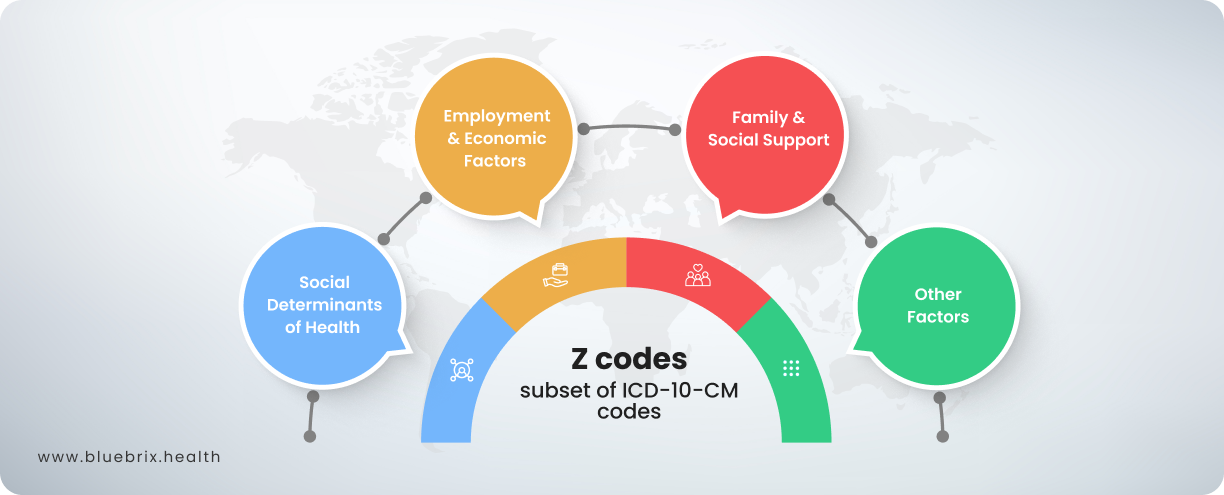
For a negative screen, the Z13.3x family (Z13.31 for depression, Z13.39 for other behavioral health screens, with Z13.89 sometimes used as a catch-all) is the standard pairing.[7] For a positive screen, some payers prefer the same Z-code, while others expect the corresponding F-code reflecting the condition identified – payer preference genuinely varies here, which is one more reason a payer-specific reference, not a single house rule, belongs in the workflow.
Where this becomes a process question
Documentation completeness is the one 96127 failure point entirely within a practice’s own control – no payer policy, no state rule, no MUE table determines whether the five elements make it into the note. That makes it worth asking directly: is completeness enforced at the point of charting, while the clinician is still in the encounter, or is it caught – or missed – only after the claim has already gone out the door?
Why won't payer rules on 96127 hold still?
Medicare, Medicaid, and commercial – three different rulebooks
Medicare runs on a national fee schedule with MAC-level local coverage determinations layered on top, and its MUE applies per date of service. Medicaid is state by state – some states bundle 96127 into the E/M visit entirely, others allow it as a standalone line item, and the difference is not predictable from one neighboring state to the next. Commercial payers are contract-dependent: reimbursement is often better than Medicare’s, but the governing policy is far less publicly documented, which means the “rule” for a given commercial plan often lives in a provider manual or a contract clause rather than anywhere searchable.
| Rule area | Medicare | Medicaid | Commercial |
|---|---|---|---|
| Unit limit source | National MUE, commonly cited at 3 units/date of service | Set state by state; may be higher or lower than the Medicare MUE | Set by contract; rarely published anywhere searchable |
| Where 96127 sits vs. the E/M | Payable with modifier 25/59 when distinct | Some states bundle it into the E/M; others allow it standalone | Varies by plan and provider contract |
| Governing document | National Correct Coding Initiative + MAC-level LCDs | State Medicaid billing manual | Provider manual or contract language |
| How often it changes | Quarterly NCCI/MUE updates | On the state’s own schedule | On the payer’s own schedule, often without notice |
Telehealth - permanent for behavioral health, not indefinite for everything else
This is one of the fastest-moving pieces of the whole picture, and worth getting precisely right rather than repeating a stale deadline. Under current federal telehealth policy, behavioral and mental health telehealth flexibilities – a patient’s home as an eligible originating site, no geographic restriction, and audio-only delivery when video is not possible or consented to – have been made permanent.[8] Non-behavioral Medicare telehealth flexibilities, by contrast, are extended only through December 31, 2027. The one behavioral-health-specific piece still on a clock is the in-person visit requirement: an in-person visit within six months of an initial mental health telehealth service, and annually after that, is not currently required, but that waiver runs through December 31, 2027, not indefinitely[9]. For 96127 specifically, the location and modality flexibilities that make remote screening practical are not going anywhere – but the documentation trail around in-person visit timing for behavioral health telehealth patients is worth a calendar reminder, not an assumption of permanence.
The scaling problem this creates
Three rulebooks that each change on their own schedule are manageable to track for a single payer. Across a full payer mix – Medicare, a handful of state Medicaid programs, and a dozen commercial contracts – it stops being something one person can hold correctly in their head, and becomes something that has to be tracked systematically or it quietly falls out of date.
See where your own 96127 claims are actually failing
A payer-specific breakdown usually surfaces one dominant failure point, not four scattered ones. Most practices assume their 96127 denials are random until someone actually maps them against unit limits, modifier sequencing, and bundling edits, payer by payer. blueBriX’s behavioral health RCM team runs that mapping against your live payer mix, so your team is fixing the actual failure point .
Schedule a demoA self-check before your next billing cycle
- Before you bill: confirm the unit limit for that specific payer, confirm the modifier sequence, confirm the instrument is documented, and confirm the ICD-10 code matches the screen result.
- Before you submit: scrub the claim for bundling conflicts against same-date codes, and check the chart note for completeness against the five required elements.
- After a denial: categorize the root cause – unit, modifier, bundling, or documentation – before resubmitting. A denial resubmitted without knowing which of the four categories caused it is very likely to deny again for the same reason.
Once you know which of these four your actual failure point is, the fix from here is either a process change your team can execute manually and consistently, or a systems change that removes the manual step altogether.
What to look for if you're evaluating a systems fix
Why manual tracking hits a ceiling
Every piece covered above compounds on every other piece: unit limits, modifier logic, bundling edits, and three independently shifting rulebooks, all held correctly at the same time, for every claim, by one biller. Errors under that load do not happen all at once and get caught – they compound quietly, a few claims at a time, until the pattern shows up in a denial report months later.
The general shift worth considering
The common thread across every denial cause in this article is the same: a manual decision point – a unit limit someone remembered, a modifier applied from memory, a payer rule tracked in someone’s head instead of checked against a current source. Platforms built specifically for behavioral health billing, blueBriX among them, are designed to move that decision point earlier, into the charting workflow itself, rather than catching the error after a claim has already been denied. When Laurel Life implemented real-time claim scrubbing and automated eligibility verification with blueBriX, claim rejections dropped 20% and payment cycles accelerated 40% – the kind of shift that comes from catching errors before submission rather than appealing them after. The same underlying approach – a payer-specific rules engine and pre-submission scrubbing built into denial management workflows – is what closes the gap this article has walked through, section by section.
A measured framing, not a guarantee
This narrows the error surface meaningfully, though correct documentation and payer-specific verification stay a clinical and administrative responsibility regardless of what system is in place. A rules engine catches a modifier applied out of sequence; it does not write the clinical interpretation of a PHQ-9 score for you.