
The burnout epidemic in behavioral health
Burnout isn’t just a buzzword; it’s a pervasive issue in the healthcare segment. A systematic review published in JMIR Medical Informatics highlighted that increased cognitive load from behavioral health EHR use is a significant contributor to clinician burnout. The study found that factors such as information overload and poor user interface design exacerbate stress levels among healthcare providers.
Unlike general-purpose systems, behavioral health requires a robust digital health tool that can manage multi-level staff coordination, group session notes with individualized focus, and custom workflows for diverse provider preferences apart from the usual EHR functions along with billing and patient engagement. And this is where Cognitive Design truly matters—it reduces friction by anticipating real-world mental load and practice patterns.
The causes of burnout (and what we often miss)
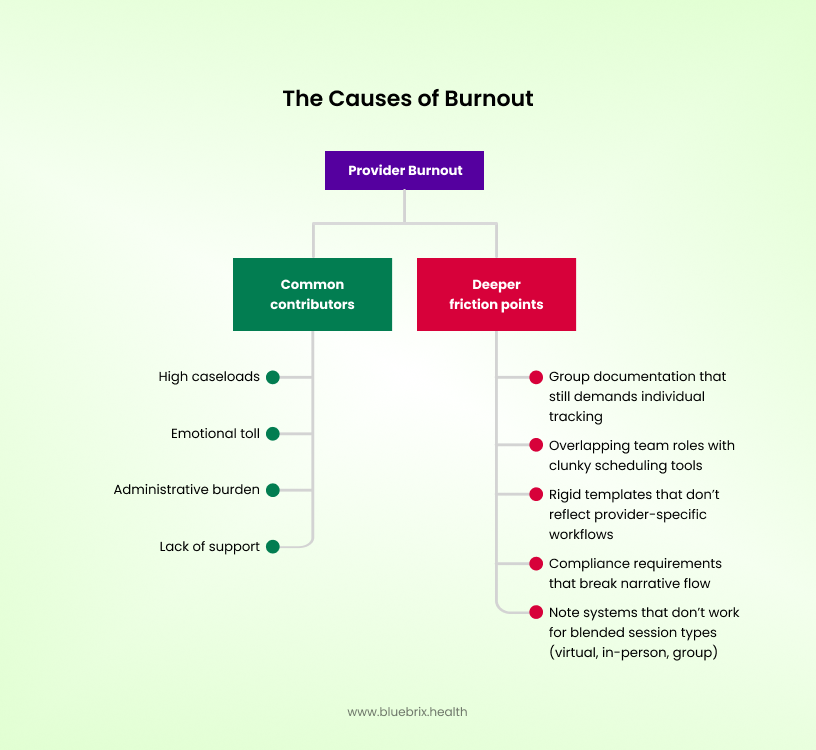
Yes, there are common contributors:
- High Caseloads
- Emotional Toll
- Administrative Burden
- Lack of Support
But burnout in behavioral health isn’t just about long hours. A systematic review in JMIR Medical Informatics highlighted how increased cognitive load from EHRs contributes significantly to clinician burnout. Poorly designed systems amplify that burden by forcing us into unnatural workflows. Another study in Psychiatric News found that physicians receiving over 114 system-generated messages a week had a 40% higher chance of burnout. In Behavioral Health, burnout also stems from deeper friction points:
- Group documentation that still demands individual tracking
- Overlapping team roles with clunky scheduling tools
- Rigid templates that don’t reflect provider-specific workflows
- Compliance requirements that break narrative flow
- Note systems that don’t work for blended session types (virtual, in-person, group)
It’s not just the volume—it’s the disconnect between system behavior and how we work that drains us. Better usability helps, but behavioral health needs more than “better UI”—we need behavioral health EHRs designed to reduce mental switching, support clinical reasoning, and match our team structures.
The role of EHR in mitigating burnout
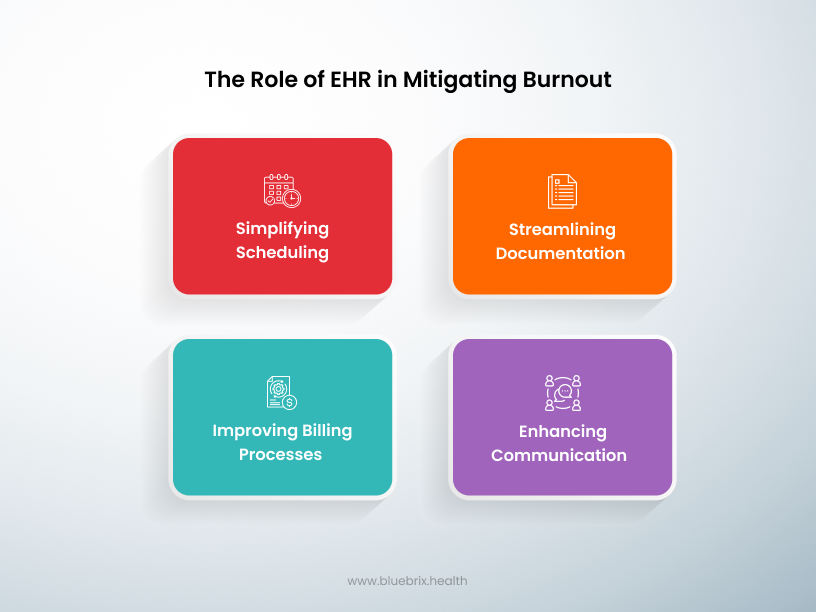
Simplifying scheduling
We don’t just schedule sessions—we coordinate between clinicians, group facilitators, supervisors, and even community health workers. That’s why blueBriX’s multi-tier scheduling engine allows role-based visibility, rule-based conflicts, and flexible calendar sharing.
You get a single source of truth—minus the headaches of double-bookings and backtracking.
Streamlining documentation
Traditional documentation often works against us. In behavioral health group therapy, we need to document shared group dynamics while still capturing individual progress, without redundant effort.
blueBriX solves this with smart group documentation tools—so you enter shared content once and then tag or customize notes per individual. Compliance boxes get checked without killing your momentum.
Improving billing processes
Billing in behavioral health is rarely straightforward. blueBriX addresses this with deep clinical-to-billing alignment. From CPT mapping to automatic flagging of service-specific payer rules, the platform simplifies what would otherwise require a separate admin team.
Enhancing communication
Behavioral Health teams often include supervisors, case managers, therapists, and external consultants. Miscommunication between them can compromise care and increase stress.
Our built-in secure messaging and shared notes help maintain alignment, while keeping all communications context-aware and traceable—an important detail when working across multiple levels of care.
Best practices for EHR design in behavioral health
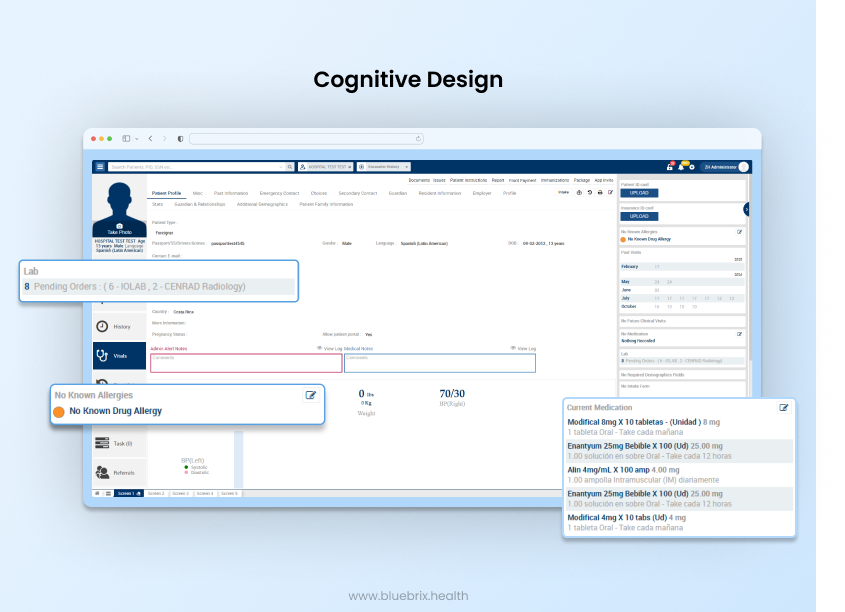
At blueBriX, we’ve learned that cognitive design, not just visual design, is the answer to mitigating most of behavioral health physician burnout.
User-centered design
User-centered design isn’t just about friendly screens—it’s about systems that think like clinicians do. That’s why our behavioral health EHR is built with feedback loops from actual behavioral health teams. Your voice isn’t just heard—it’s designed into the product.
Customizable templates & workflows
No two therapists work the same way. Our behavioral health EHR lets each provider customize documentation flows, templates, and dashboards—so they can work how they think, not how a generic system dictates.
This flexibility also empowers administrators to define role-based workflows, ensuring data consistency and compliance without forcing rigid patterns.
Interoperability
blueBriX plays well with others. Whether its primary care EHRs, labs, or pharmacy records, we offer seamless data exchange to support holistic care plans.
Integrated billing systems
Our behavioral health billing system isn’t bolted on—it’s part of the clinical logic. Features include:
- Revenue tracking per service line
- Clean claims engine
- Built-in communication tools for billing and coding teams
All designed to remove the silos between care and payment.
Automated data capture
We remove manual entry where it’s not needed. From auto-filled forms to AI-assisted documentation support, we help clinicians stay in the moment—and still check every compliance box.
Effective communication tools
Beyond messaging, blueBriX enables team collaboration within the client record—no app-switching or fragmented updates. Shared case notes, alerts, and annotations keep everyone in sync.
Telehealth integration
Behavioral Health has embraced hybrid care models. Our built-in telehealth tools allow seamless scheduling, documentation, and session follow-ups—all without third-party plugins or extra logins.
Robust reporting and analytics
From client outcomes to team productivity, our dashboards help behavioral health leaders stay informed—and adjust strategies in real time. Want to see who’s at risk of burnout based on session load? You can.
Artificial intelligence (AI) and machine learning
Our healthcare AI assistant helps with real-time documentation, summarizing notes, and generating suggestions based on prior cases. It’s like a smart scribe that helps reduce admin time while improving clinical clarity.
Best practices for implementing a new EHR
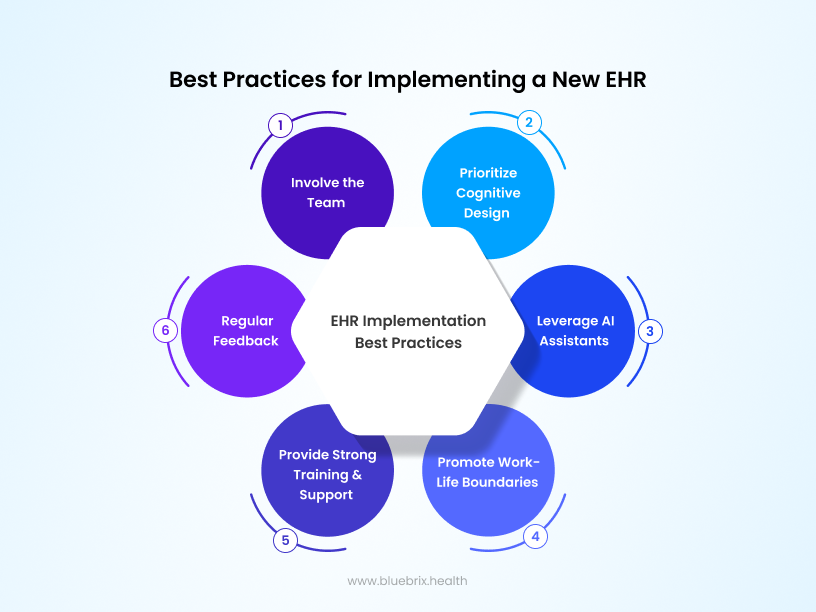
Involve the team
You can’t build for providers without providers. blueBriX supports deep stakeholder involvement during setup.
Prioritize cognitive design
Design isn’t just UI—it’s workflow. We build to reduce cognitive switching and support clinical thought processes. By taking feedback from the end-users throughout the design, customization and implementation process, behavioral health EHR systems can be tailored to your unique workflows.
Leverage AI assistants
With healthcare AI-tools for notetaking, we help you focus on the session, not the screen. AI-powered tools are stepping in to reduce our administrative burdens. These assistants can automate tasks such as note-taking and summarizing clinical evidence, giving us back precious time to engage with our patients.
Promote work-life boundaries
By making documentation more efficient, we help you finish work at work, not after hours.
Provide strong training & support
With role-specific onboarding, built-in help, and peer mentoring blueBriX ensures that no one is left struggling alone. Continuous support, like having an IT helpline or peer mentoring, ensures we have somewhere to turn when challenges arise.
Regular feedback
We don’t ship it and forget it. We collect live feedback continuously to evolve with your team’s needs.