

Behavioral health is no longer on the healthcare fringe—it’s front and center. In fact, 1 in 5 U.S. adults experience mental illness each year, and demand for services continues to outpace supply. As practices scale to meet this surge, having the right behavioral health EHR is mission critical.
Yet according to a 2024 ONC data brief drawing on SAMHSA’s National Substance Use and Mental Health Services Survey, one in four substance use and mental health treatment facilities still use a mix of electronic health records and paper charts. Only 19% participate in a Health Information Exchange, the basic infrastructure for coordinated care. And fewer than half of all behavioral health facilities use their EHR for patient messaging or to give patients online access to their own records. Having an EHR is not the same as having the right one. From nuanced clinical documentation to compliance with HIPAA and 42 CFR Part 2, behavioral health requires an EHR designed around its specific realities, not retrofitted from primary care models.
The eight platforms evaluated in this guide were selected specifically because they are purpose-built for, or substantially optimized for, behavioral health care. None are general EHRs with a behavioral health module.
Top 8 behavioral health EHRs: A detailed comparison
Use this table to find the platform that matches your organization type, then read the full evaluation below.
| Platform | Best Suited For | Key Strength | Key Limitation |
|---|---|---|---|
| blueBriX
Enterprise / Mid-market |
CCBHCs, CMHCs, PRTFs, IDD and SUD providers, multi-location practices | FHIR R5-native; Trust Engine human-in-the-loop AI; HITRUST + 42 CFR Part 2 | Ideal for enterprise and mid-sized behavioral health organizations with complex workflows |
| Qualifacts
CareLogic / InSync / Credible |
Enterprise CMHCs, CCBHCs, SUD, IDD, multi-state agencies | Serves 33% of US CCBHCs; KLAS-ranked #1 BH EHR; ASAM + MAT + EPCS/PDMP | 3 separate platform architectures; 9–18 month implementation |
| Netsmart
myAvatar |
Large state-funded CMHCs, public sector BH agencies, ACOs, multi-site enterprises | #1 Black Book BH EHR; 500K+ users, all 50 states; Bells Virtual Scribe AI | Capterra 2.3/5, complex UI; steep learning curve; high implementation cost |
| NextGen Healthcare
Behavioral Health Suite |
Integrated care (BH + primary care + oral health); CCBHCs, residential, IDD | Only unified BH + primary care + oral health platform; Ambient Assist AI; eMAR | G2 3.7/5, lower satisfaction than BH-native platforms; feature-heavy for specialists |
| Core Solutions
Cx360 |
Mid-to-large BH, SUD, and IDD providers; community-based care orgs | Purpose-built BH/SUD/IDD; ePrescribing + eMAR; evidence-based tools built in | Limited G2/Capterra review data; enterprise implementation learning curve |
| TherapyNotes
Solo & small group |
Solo practitioners, small groups, nonprofits, training clinics | G2 4.4/5 (97 reviews) highest in this comparison; DSM-5 templates; Wiley planner | No CCBHC reporting, ASAM, or 42 CFR Part 2; not for enterprise |
| TheraNest
Ensora Mental Health |
Solo and small groups, family counselling centres, schools and faith-based orgs | G2 4.2/5 (127 reviews); lowest entry price ($29/month); Wiley planners; no-download telehealth | Telehealth, portal, and Wiley are paid add-ons; no mobile/desktop app |
| SimplePractice
Solo & small private practice |
Solo practitioners, psychiatrists (ePrescribe), clinicians new to EHR | G2 4.1/5 (125 reviews); clean mobile-first UI; strong client portal | Significant price increases 2025–2026; billing and ePrescribe gated to higher tiers |
Here are eight of the most trusted and widely adopted behavioral health EHR platforms designed (or optimized) for behavioral health practices in the US.
1. blueBriX
blueBriX Behavioral Health EHR is a purpose-built electronic health record system designed for behavioral health organizations of all sizes—from solo practitioners to large community mental health centers (CMHCs), CCBHCs, and virtual care providers. The platform focuses on whole-person care, robust compliance, and workflow flexibility, aiming to reduce administrative burden and improve patient outcomes through integration-agnostic, intelligent, secure, and highly configurable tools.
Key features:
- Flexible & customizable workflows: Customizable documentation templates, assessments, and treatment plans, alongside role-based dashboards tailored to individual providers and multi-location support.
- Unified scheduling & billing: Intelligent scheduling tools for various session types, patient self-booking, and an all-in-one billing module with mental health-specific coding, claims management, and automated denial resolution.
- AI-powered documentation: AI-assisted note suggestions and automated documentation tools to significantly reduce clinician workload and ensure efficient, accurate record-keeping.
- Advanced revenue cycle management: Incorporates sophisticated billing and claims management tools specifically designed to handle the complexities of behavioral health billing, aimed at improving financial performance and reducing accounts receivable.
- Built-in telehealth & remote care: Fully integrated telehealth capabilities for virtual appointments, group sessions, and real-time documentation, ensuring secure communication and quality virtual care.
- Comprehensive care coordination: Real-time collaboration within patient records, shared notes, secure messaging, and seamless integration with other EHRs, HIEs, labs, pharmacies, and multi specialty clinics.
- Powerful analytics & reporting: A no-code report builder for custom clinical, financial, and operational reports, coupled with built-in outcome tracking and performance dashboards for value-based care.
- Specialized cohort management & compliance reporting: Enable precise identification, tracking, and management of specific patient cohorts based on clinical conditions, demographics, or program enrollment. This provides robust, automated reporting capabilities to meet federal and state compliance requirements, track outcomes across specific populations, and support reporting and quality improvement initiatives.
- Enhanced patient engagement: Self-service patient portals, automated reminders, digital forms, and feedback tools, designed to reduce no-shows and foster stronger patient engagement. This includes text-based engagement for appointment confirmations and general notifications, simplifying communication without requiring a login.
- Advanced security & compliance: Industry-leading security with HIPAA, 42 CFR Part 2, and HITRUST compliance, offering role-based access controls, end-to-end encryption, and automated compliance reporting.
- Integration & interoperability: Effortless integration with existing healthcare IT infrastructure and standard healthcare data exchange protocols (e.g., FHIR, HL7) to ensure smooth, secure, and comprehensive data flow.
Best suited for:
- Multi-location practices and large enterprises: These require centralized management and scalable workflows to oversee diverse teams and locations effectively.
- Psychiatric Residential Treatment Facilities (PRTFs): Well suited for organizations that require structured residential workflows, multidisciplinary care coordination, intensive documentation, medication management, compliance tracking, and support for long-term behavioral health treatment programs.
- Clinicians transitioning to digital practice: Easy to adopt for providers new to EHRs, with intuitive interfaces, guided workflows, and minimal training overhead.
- Community mental health centers (CMHCs) and CCBHCs: These organizations need specialized cohort management and robust reporting capabilities.
- Practices prioritizing client engagement: Well suited for organizations that rely on strong client portals, integrated telehealth, automated reminders, and digital intake to improve access and continuity of care.
- IDD and SUD providers: These benefit from individualized care plans and strict confidentiality features tailored to the unique needs.
- Family counseling centers and mental health agencies: Well suited for organizations offering individual and family psychotherapy, with the understanding that some platforms may have limitations when managing multiple family members under a single household or account structure.
- Subscription-based and direct psychiatry practices: These often seek streamlined billing and scheduling to support their specific practice models.
2. Qualifacts
Qualifacts is a leading provider of electronic health record software designed specifically for behavioral health and human services organizations. Its solutions are built to modernize care delivery, streamline workflows, and improve both patient outcomes and staff satisfaction. The platform is known for its compassion-led innovation, focusing on strengthening the provider-client relationship through technology that supports, rather than complicates, care delivery.
Key features:
- Integrated clinical documentation: Comprehensive and user-friendly tools with customizable templates, detailed clinical notes, assessment tools, and outcomes tracking, supported by automated workflows to ensure compliance and reduce manual effort.
- Streamlined scheduling & intake: Efficient processes for staff and clients, including automated form assignments, e-signature collection, client self-scheduling through a secure portal, and automated reminders to minimize missed appointments.
- Robust telehealth & virtual care: Fully integrated, HIPAA-compliant telehealth capabilities for individual and group sessions (up to 50 participants), featuring secure video, messaging, whiteboarding, transcription tools, and 24/7 patient portal access.
- Comprehensive billing & revenue cycle management (RCM): Integrated features covering eligibility verification, claims submission, reimbursement tracking, automated coding, and support for complex payment models, with optional outsourced RCM services.
- Advanced business intelligence & analytics: Powerful reporting and analytics tools with customizable dashboards for monitoring clinical outcomes, staff productivity, financial performance, and compliance metrics with real-time data visualization.
- User-centric experience & customization: Modern, intuitive interfaces across all EHR platforms designed to reduce clicks and automate tasks, alongside highly configurable workflows and dashboards tailored to individual user roles and organizational needs, with ongoing AI investments.
- Strong security & compliance: Robust security protocols and interoperability standards ensuring data privacy, and extensive support for regulatory requirements, including electronic prescribing of controlled substances (EPCS) and Prescription Drug Monitoring Programs (PDMP).
- Specialized behavioral health support: Tools and workflows specifically designed for mental health, substance use disorder, and intellectual/developmental disabilities (I/DD) providers, including integrated ASAM assessments and support for medication-assisted treatment (MAT).
Best suited For:
- Substance use disorder (SUD) and addiction treatment providers: Facilities needing integrated ASAM assessments, MAT support, and EPCS/PDMP compliance.
- Intellectual/developmental disabilities (IDD) and autism agencies: Benefits from tailored workflows, case management, and public health reporting.
- Public health departments and HHS organizations: Strong choice for government and nonprofit agencies due to features for case management and inter-agency coordination.
- Enterprise community mental health centers: Large organizations needing advanced configurability, multi-location management, and complex workflow support.
- Certified community behavioral health clinics (CCBHCs): Ideal due to its leading technology partnership, rigorous compliance, and reporting support for the CCBHC model.
- Multi-location and multi-state agencies: Organizations requiring centralized management, interoperability, and robust reporting across multiple sites.
- Small and private practices: Can also benefit from Qualifacts’ core EHR features and scalability, offering room to grow.
Note: For organizations with extremely narrow or specialized needs (e.g., exclusively addiction treatment), its broad feature set might include irrelevant functionalities, potentially leading to a less streamlined user experience for those specific workflows.
3. NetSmart Technologies
NetSmart Technologies is a leading provider of electronic health record solutions specifically designed for behavioral health, human services, and community-based care organizations. Their behavioral health EHR platform is widely used across the United States to support care delivery for millions of individuals.
Key features:
- Whole-person, value-based care support: Purpose-built to facilitate integrated care across mental health and substance use disorder treatment, with specific design elements to help organizations thrive under value-based care models.
- Advanced cloud-based technology: Leverages real-time analytics and cloud-based SaaS solutions (like myAvatar™) for improved decision-making, high scalability, robust security, and ease of use.
- AI-driven documentation: Integrates generative AI features, such as the Bells Virtual Scribe, which uses the GIRPP (Goal, Intervention, Response, Progress, Plan) template to automate and streamline clinical documentation, reducing administrative burden and increasing time for patient care.
- Comprehensive clinical & administrative functionality: Includes robust appointment scheduling and management, e-Prescribing and medication management, lab integration, a patient portal for engagement, outcome tracking and reporting, and secure messaging for seamless provider communication.
- Strong compliance & security: Ensures data privacy and security in accordance with HIPAA and other regulatory requirements, crucial for sensitive behavioral health data.
- Interoperability: Designed to facilitate data sharing and collaboration across a wide array of care settings and systems.
Best suited for:
- Behavioral health and human services providers: Organizations specializing in mental health, substance use disorder treatment, and community-based behavioral health services.
- Certified community behavioral health clinics (CCBHCs): Explicitly designed to support CCBHC compliance, outcome tracking, and value-based care.
- Public sector agencies: State and county agencies overseeing mental health, corrections, and social services that need to meet regulatory requirements and optimize resource utilization.
- Health homes and accountable care organizations (ACOs): Ideal for driving collaboration and data sharing across primary care, behavioral health, and social services for integrated care delivery.
- Large, multi-site providers: Organizations requiring a highly scalable, secure, and high-performance EHR platform capable of managing millions of lives.
- Technology-forward organizations: Practices looking to leverage advanced features like AI-driven documentation, real-time analytics, and robust interoperability to enhance efficiency and outcomes.
Note: Given its comprehensive nature and enterprise-level capabilities, it may have a steeper learning curve or require more extensive implementation for smaller practices compared to simpler solutions.
4. NextGen Healthcare
NextGen Healthcare Behavioral Health Suite is a comprehensive electronic health record platform designed specifically for behavioral health organizations. It integrates a wide range of clinical, administrative, and reporting functionalities to support whole-person care across outpatient, residential, and community settings. NextGen stands out for its unique ability to combine behavioral health with primary care, oral health, addiction treatment, and human services into a single, unified software solution.
Key features:
- Integrated whole-person care: A unique platform that unifies behavioral health, primary care, oral health, addiction treatment, and human services within a single solution, facilitating comprehensive, coordinated care across diverse settings.
- AI-driven documentation (Ambient Assist): Features NextGen Ambient Assist, an AI-powered tool for hands-free documentation that transcribes and summarizes patient encounters in real time, significantly reducing administrative burden and preventing clinician burnout while ensuring HIPAA compliance.
- Mobile access and field documentation: Allows clinicians and direct support professionals to document patient encounters, complete clinical tasks, and collaborate from any location using mobile devices.
- Robust reporting and compliance: Offers configurable reporting tools that support adherence to evolving state and federal requirements, including UDS, CMS, PQRS, MIPS/MACRA, and value-based payment models.
- Specialized behavioral health content: Includes tailored features for mental health, substance use disorder treatment, intellectual and developmental disabilities (I/DD), and residential care, supporting documentation for activities of daily living, electronic medication administration (eMAR), and specific service plans.
- Seamless interoperability: Facilitates secure communication and data exchange with hospitals and other EHR systems.
Best suited for:
- Traditional behavioral health clinics & CCBHCs: Clinics focused on mental health, substance use disorders, and crisis intervention, benefiting from specialized content and compliance tools.
- Providers serving intellectual & developmental disabilities (I/DD): Organizations requiring specific features for documenting activities of daily living and service planning for I/DD populations.
- Residential and outpatient treatment centers: Facilities needing dedicated tools for residential administration, shift notes, eMAR, and comprehensive discharge management.
- Mobile and community-based care teams: Providers who require flexible and efficient documentation and collaboration capabilities in the field or across multiple locations.
Note: This system has a lot of features for integrated care. Smaller, more specialized practices might find it has more than they need, which means some parts of it could go unused.
5. Core Solutions
Core Solutions’ Cx360 platform is a purpose-built, enterprise-level EHR designed specifically for behavioral health, substance use, and intellectual and developmental disability (IDD) providers. Delivered as a SaaS solution, Cx360 aims to streamline clinical, administrative, and billing processes while supporting evidence-based, client-centered care.
Key Features:
- Comprehensive Clinical Tools: Provides intuitive documentation workflows for assessment, treatment planning, and progress notes, all specifically tailored for behavioral health conditions, with embedded evidence-based tools and best practice templates.
- Enhanced Care Coordination & Communication: Facilitates secure, bi-directional communication among all care team members, both internal and external, to ensure seamless collaboration across the entire continuum of care.
- Integrated Telehealth & Mobile Capabilities: Offers built-in telehealth and mobile functionalities for remote-ready service delivery and documentation, supporting flexible care models.
- Robust Client Engagement: Features a comprehensive client portal for secure messaging, documentation review, appointment scheduling, and convenient bill payment, enhancing client involvement and satisfaction.
- Comprehensive Medication Management: Supports ePrescribing and electronic medication administration records (eMAR) for safe and effective medication tracking, applicable across various settings including residential care.
- Highly Configurable & Scalable Platform: Offers both pre-designed workflows and customizable process designers, allowing organizations to tailor the platform precisely to their unique needs, making it suitable for small clinics up to large, multi-site agencies.
Best Suited For:
- Behavioral Health and SUD Providers: Mental health clinics, substance use disorder treatment centers, and organizations requiring tailored workflows, documentation, and compliance.
- Organizations Serving Intellectual & Developmental Disabilities (IDD): Ideal for managing individualized life plans and client engagement features specific to IDD.
- Community-Based & Integrated Care Organizations: Agencies needing robust care coordination, interoperability, and real-time data sharing across behavioral, medical, and social domains.
- Providers Focused on Evidence-Based & Measurement-Based Care: Organizations aiming to improve clinical outcomes through data-driven approaches with AI-powered tools and symptom tracking.
Note: As an enterprise-level SaaS solution with extensive customization, implementation might require a dedicated effort and potentially a learning curve for new users.
6. TherapyNotes
TherapyNotes is a leading cloud-based electronic health record and practice management software specifically designed for behavioral and mental health professionals, including therapists, psychologists, psychiatrists, and social workers. It is widely utilized by solo practitioners, group practices, and multi-location organizations, offering a comprehensive and intuitive solution tailored to the unique needs of mental health providers.
Key Features:
- Comprehensive Patient Management: Enables users to easily design and customize treatment plans, document progress notes, and create detailed psychological or psychiatric evaluations.
- Integrated Scheduling and Task Management: Offers robust scheduling tools, including recurring appointments, employee work calendars, automated appointment reminders, and an integrated to-do list to track incomplete notes and deadlines efficiently.
- Streamlined Billing and Payment Processing: Includes an integrated billing module that supports insurance claims, seamless payment processing, and secure storage of credit card information, reducing administrative workload.
- Customizable Patient Portal: Provides a user-friendly and secure client portal where patients can request or reschedule appointments, access their records, and communicate securely with providers, enhancing engagement and convenience.
- Mobile and Multi-Location Accessibility: As a web-based system, TherapyNotes is accessible on various devices (PCs, Macs, tablets, smartphones) and fully supports practices with multiple offices or remote staff, offering flexible access from any location.
- Specialized Note Templates: Features optimized, form-based note templates specifically tailored for behavioral health, including integrated DSM-5 diagnostic codes and a mental health spellcheck, facilitating efficient and accurate documentation.
- Integrated Telehealth Functionality: Supports telehealth capabilities directly within the platform, allowing practitioners to conduct virtual sessions and manage all related documentation and billing seamlessly from within the system.
Best Suited For:
- Solo Practitioners: Ideal for psychologists, therapists, psychiatrists, social workers, and counselors needing an easy-to-use, comprehensive EHR tailored to their specific needs.
- Educational Institutions and Training Clinics: Offers simulated access for academic purposes, making it a practical training tool.
- Nonprofits and Community Mental Health Centers: Provides discounts for nonprofits and a robust feature set for various mental health services.
Note: Its exclusive focus on behavioral health makes it less suitable for integrated care models involving primary care or other specialties, and while it scales well for medium-sized groups, enterprise-level organizations may need a solution with broader functionalities.
7. TheraNest
TheraNest—now rebranded as Ensora Mental Health—is a comprehensive electronic health record and practice management platform specifically designed for mental and behavioral health professionals, including therapists, psychologists, social workers, and counselors. It is widely used by solo practitioners, small group practices, and various behavioral health organizations.
Key Features:
- Comprehensive Practice Management: Streamlines essential workflows such as scheduling, billing, documentation, and client management.
- Secure Telehealth Integration: Offers HIPAA-compliant telehealth capabilities that do not require additional downloads.
- Customizable Documentation: Includes customizable forms, progress notes, and access to Wiley Practice Planners for efficient and thorough treatment planning and documentation.
- Integrated Billing & Payments: Handles insurance claims (CMS-1500 forms), credit card processing, and revenue cycle management, with advanced features available as add-ons.
- Scalability & Security: Offers enterprise-grade security and multi-location management, making it suitable for organizations requiring compliance and growth capabilities.
Best Suited For:
- Family Counseling Centers & Mental Health Agencies: Suitable for organizations offering psychotherapy, though limitations may exist for handling multiple family members under one account.
- Social Service Organizations & Faith-Based Groups: Can utilize HIPAA-compliant documentation and streamlined administrative tools for client management.
- Schools and Universities: Practical educational institutions that provide counseling services for student mental health management.
Note: This solution may not be ideal for very large group practices, inpatient settings, or organizations that require UB-04 claim forms. Additionally, essential features like telehealth, Wiley Practice Planners, and the client portal come with extra monthly fees, while limited team-based treatment planning and the absence of a fully featured mobile or desktop app may impact collaboration and mobility.
8. SimplePractice
SimplePractice is a leading cloud-based electronic health record and practice management platform designed specifically for behavioral health professionals and related wellness providers. It is widely recognized for its simple interface, comprehensive feature set, and ability to streamline both administrative and clinical workflows for solo practitioners and small to mid-sized practices.
Key Features:
- Scheduling and Appointment Management: Offers robust tools for online booking, calendar management, and automated appointment reminders, significantly reducing no-shows.
- Integrated Telehealth: Provides HIPAA-compliant video sessions with clients, fully supporting remote care delivery.
- Efficient Documentation and Clinical Notes: Includes customizable templates for SOAP notes, treatment plans, and discharge summaries.
- Simplified Billing and Insurance: Automates invoicing and manages insurance claims and payment processing, with e-prescribing available as an add-on.
- Engaging Client Portal: Allows clients to access intake forms, schedule appointments, communicate securely, and make payments, improving engagement and workflow.
- Mobile Accessibility: Enables practitioners to manage their practice on the go with a dedicated mobile app.
- Practice Growth Tools: Features reporting, analytics, referrals, and marketing tools to help practices expand and manage their client base.
Best Suited For:
- Psychiatrists and Prescribers: Now includes ePrescribe for integrated medication management.
- Clinicians Transitioning to Digital Practice: Easy to use for those new to EHRs.
- Practices Prioritizing Client Engagement: Strong client portal, telehealth integration, and automated reminders.
Note: It may not be ideal for very large or complex organizations with highly specific needs, as advanced features like insurance billing, group practice tools, and e-prescribing are only available in higher-tier plans, potentially raising overall costs.
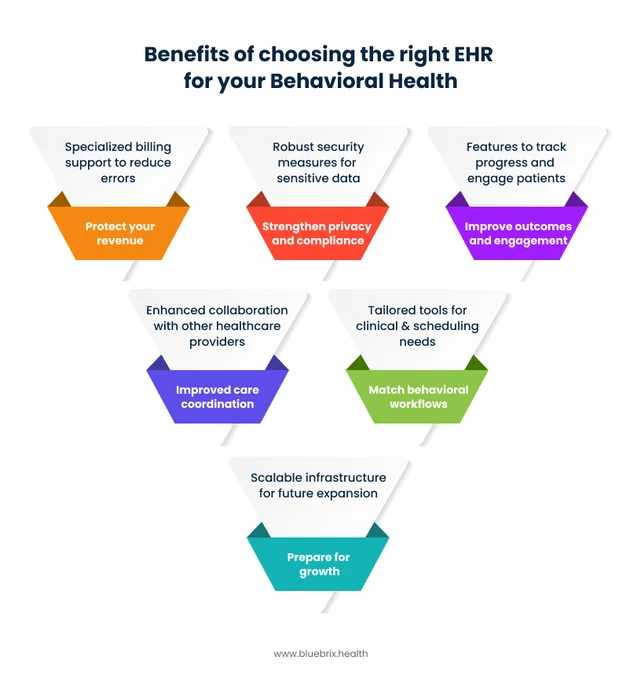
Now that you’ve explored the top behavioral health EHRs in the market, the next step is knowing what to look for. Choosing the right EHR isn’t just about big names—it’s about finding a system that aligns with your organization’s specific needs, enhances care delivery, and drives operational efficiency. This guide outlines the essential features you must prioritize when selecting your next behavioral health EHR, ensuring it truly aligns with your unique needs. Likewise, by following these steps, you can select the best care management software.
Why behavioral health organizations cannot rely on a general EHR
The most common mistake behavioral health organizations make when selecting an EHR is evaluating general healthcare platforms, Epic, Oracle Health, Athenahealth, eClinicalWorks, alongside purpose-built behavioral health systems. These are not equivalent options. General EHRs were designed for episodic, acute care: hospital admissions, surgical workflows, and physician billing under fee-for-service. Behavioural health operates on fundamentally different clinical, regulatory, and financial rails.
Clinical documentation
General EHRs document encounters. Behavioural health EHRs document relationships. A progress note in a psychiatric outpatient setting is not a chief-complaint-to-diagnosis-to-prescription encounter. It is a longitudinal record of a therapeutic relationship, tracked against treatment goals, measured with validated instruments like the PHQ-9, GAD-7, ASAM criteria, and Columbia-Suicide Severity Rating Scale, and connected to a multi-disciplinary treatment plan that is updated collaboratively over months or years. A general EHR retrofitted for this purpose will either require extensive custom configuration, at significant cost and maintenance overhead, or will force clinicians into documentation workflows that do not reflect how behavioural health care actually works.
Billing complexity
Behavioural health billing is not a simplified version of medical billing. It is a distinct discipline. Time-based therapy billing under CPT codes 90832–90847, CCBHC prospective payment system (PPS) coding, Medicaid and managed Medicaid claims with behavioral health carve-outs, and prior authorization under CMS-0057-F each require billing logic that general EHR platforms are not designed to handle natively. Practices that attempt to run behavioral health billing through a general EHR billing engine consistently report higher denial rates, longer accounts receivable cycles, and greater administrative burden per claim.
42 CFR Part 2 compliance
Organizations serving patients with substance use disorder are subject to 42 CFR Part 2, a federal confidentiality statute that governs SUD treatment records with stricter requirements than standard HIPAA. Part 2 mandates patient-specific written consent for any disclosure of SUD records, imposes restrictions on re-disclosure, and requires specific consent language in claims submissions to certain payers. A general EHR is not architecturally designed for this. Attempting to manage Part 2 compliance through a general platform creates documented legal risk and is one of the most consistently cited compliance failures among practices that have tried it.
Outcomes reporting and program compliance
CCBHCs, CMHCs, and other publicly funded behavioral health programs are required to report against specific quality measures, program-specific data sets, and state authority reporting requirements. These are not reports that can be generated from a general EHR without extensive custom development. Purpose-built behavioral health EHRs embed CCBHC quality measure tracking, cohort management, and state-specific reporting into their core architecture, not as add-on modules. For CCBHCs in particular, the difference between a native reporting engine and a retrofitted one directly affects certification status and federal funding.
What is changing in behavioral health EHR requirements in 2026
Three regulatory and technology developments are directly reshaping what a behavioral health EHR needs to do in 2026, and should inform any platform evaluation happening this year.
FHIR and prior authorization: The CMS Interoperability and Prior Authorization Final Rule (CMS-0057-F) required most payers to implement FHIR-based prior authorization processes by January 1, 2026, with API development requirements following in 2027. For behavioral health practices, this means the payers funding the majority of services are moving to electronic prior authorization. EHR platforms that are not FHIR-ready will require manual workarounds at each payer transition.
CCBHC expansion and quality reporting: The Consolidated Appropriations Act of 2024 made the CCBHC program a permanent Medicaid state plan benefit. SAMHSA’s 2023 certification criteria, mandatory from July 1, 2024 require quality measure reporting beginning calendar year 2025. EHRs serving CCBHC,s must be able to capture and report on FUH, FUA, IET, and PCR-AD measures at the point of care.
AI documentation tools, what human-in-the-loop means in practice: AI-assisted clinical documentation is now a standard feature across most major behavioral health EHR platforms. The evaluation question for 2026 is not whether AI documentation is available, but whether the platform’s AI architecture maintains clinician oversight at every step. For organizations with CCBHC quality measure reporting obligations or payer audit exposure, AI-generated notes that are not reviewed and validated before submission create compliance risk. Platforms with a defined human-in-the-loop design, where the AI suggests and the clinician validates before any note is finalized, are the appropriate standard for these settings.
What EHR switching involves: a realistic timeline
Switching behavioral health EHR platforms is a significant operational undertaking. The implementation timeline for smaller outpatient practices typically runs 60 to 90 days. Mid-size organizations, roughly 10 to 50 clinicians, should plan for three to six months for a well-scoped deployment with a responsive vendor. Enterprise implementations across multiple locations take longer still. Enterprise implementations across multiple locations take longer. The key variables are data migration complexity, the number of integrations required (labs, pharmacies, HIEs, payers), and the level of workflow configuration needed for your program type.
The most commonly underestimated costs in EHR switching are staff training time, the productivity dip in the first 60 days post-go-live, and the cost of running parallel systems during transition, all documented by MGMA as recurring financial blind spots in EHR transitions. Where possible, plan your go-live during a lower-census period to reduce disruption to ongoing care.
The compliance-driven question to ask every vendor: can you demonstrate a live implementation with an organization of similar size and program type to ours, and can they speak to their experience? Reference checks with current clients in similar settings are the most reliable predictor of implementation success.